
Olalekan Adepoju, PhD
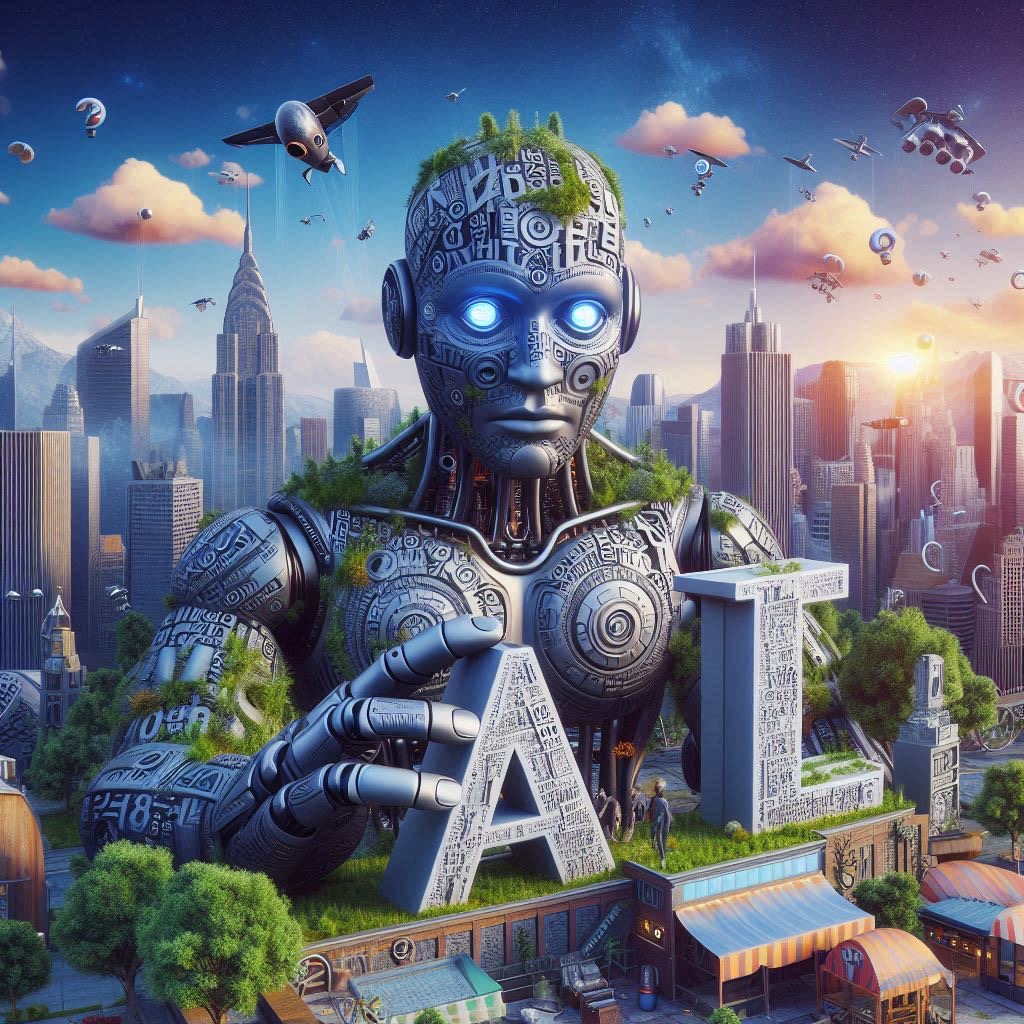
The world is currently experiencing a radical change and our understanding of how we exist in it keeps changing; all thanks to Artificial Intelligence (AI). Broadly defined, AI refers to machine learning systems that make predictions based on statistical models constructed from vast quantities of data. From the workplace to education, entertainment and to virtually every aspect of our lives, the unthinkable vastness of these data systems has necessarily enabled a more efficient way of doing things.
Basically, AI has revolutionized modern society in ways akin to the Industrial Revolution of the late 18th century to the mid-19th century when it was thought that machines would replace people at work. As such, the hype around AI is understandable as majority of people have testified to its capacity to automate tasks, make intelligent decisions and learn patterns of behavior, thereby potentially making people more efficient in their life activities. On the other hand, there are non-believers who have not and would not associate themselves with any expressions of AI due to skepticism and, probably, anxieties about AI replacing humans and humanity. The fear is that AI is the beginning of another Great Replacement, again, mirroring narratives from the Industrial Revolution.
However advantageous or anxiety-filled this AI capabilities sound, the truth is that the world is experiencing something revolutionary and the way we engage it will determine its impacts on us. In this opinion piece, therefore, I would like to direct readers’ attention to the harm lurking beneath the AI hype should they not have considered that other side. Let us all pause a little bit, not focusing on the experiential benefits or personal grudges with AI. But let us think about the cost of this innovative experience…the untold behind-the-scenes but harmful impacts of these AI technologies. Is this modern society able to pay this price? If yes, what part of the society suffers thebrunt…third world countries like always? Let’s examine someof the harm beneath the AI hype.
The AI expressions such as ChatGPT as well as the data centers that keep them functioning are adversely impacting the climate due to the huge energy their operations depend on. Recently, I read about the unthinkable number of kilowatts of energyneeded to power AI technologies and I could not believe many people are refusing to focus on this sad issue. For instance, in a blog posted by a Cloud Security platform ProActive, it was reported that each question you ask ChatGPT uses approximately 0.0025 kilowatts of electricity. Imagine how many questions you ask ChatGPT and how many people interact with the chatbot per day! The blog estimated that if you interact with ChatGPT 100 times a day, you could be using around 0.25 kilowatts daily. Over a month, that’s around 7.5 kilowatts just through your AI usage. To put it in perspective: that is the same amount of energy you need to run an average refrigerator for about 5 hours. Already, our climatic conditions keep worsening daily due to human pollution; now the expressions of these AI technologies are adding to ‘death’ of the climate, which can potentially lead to harmful consequences for the continued existence of humans and humanity.
In addition to the damage done to the climate, there is harmdone to people’s linguistic and cultural identity, which I am referring to as lingua-cultural whitewash. It is evident that the creators of these AI technologies wittingly or unwittingly develop these technologies from Western (linguistically and culturally dominant) perspectives with zero consideration of the languages and cultures of the non-Western (minoritized)population. For instance, the current version of ChatGPT does not have the capacity to ‘intelligently’ use language to compose text in a way that reflects the culture, style and linguistic features other than the dominant ones. This kind of whitewashing is harmful to the identity of non-dominant groups, an unfortunate situation that further reinforces the equity concerns about AI technologies.
I think AI is good if put to responsible use; I see it as complementary technology that has potential for making work more efficient. The big challenge for me is how people speak so highly, often utopian, about it as a great replacement tool without considering the harm that comes with its unhinged adoption as well as the narratives about it. Hence, as I wrap up this piece, some questions I want us to keep pondering are: who is benefiting from these AI advancements at this point; who is suffering from them and how can we ensure to mitigate these concerns before they escalate?
Olalekan Adepoju, PhD
College of Staten Island, CUNY
olalekan.adepoju@csi.cuny.edu
Olalekan Adepoju, PhD is a college professor who teaches courses in writing and rhetoric at the College of Staten Island, CUNY, New York. His research interests lie in the intersections of rhetoric, transnational writing, empathy, GenAI, and social justice. He has authored various articles, each contributing valuable insights to the field of English language, Rhetoric and Composition.
 ArtisansQuill| Celebrating Wordcraft