

Image Credit: Leonardo Yip/unsplash
Japa—the nudge to leave—had set its tone for long. The teeth of the waiting season were becoming whiter, following the doubt—like a hangover cloud—which dissipated from each email I exchanged with Professor Prochazka, the Chair of the Graduate Board at DALC, Charles University, Prague.
“Dear Ndubuisi, many thanks for your proposal. It is interesting and detailed.”
That sounded nice, but it was the usual line. It only elicited a smirk—not because I didn’t take kindly to that moment of acknowledgment of my efforts, but I’d let it breeze past. I had then become almost duck-backed to such remarks. The roads had been bumpy, and Prague looked like a past signpost in the Japa scene of my many unwritten stories.
Did those affirmations from Prochazka matter? Wouldn’t they pull an Alabama rebound? Or a McMaster technical application somersault? I thought hard and long, all through.
The 2017–2019 application seasons had me seething and becoming a clump of nothing. The application fees had me literally broke, and all came to zero for me. Granny Nkechi came to my rescue multiple times. Kanebi sacrificed so much; prayers emptied out at my picture in her room. Support flowed like oil from Olive Mount. Kenny stayed through prayers. Days died off with elastic hope, and anxiety exhausted. Partial funding came for some. Others responded with silence. That was not the goal. Japa gnawed, but it had to be for something befitting.
You couldn’t be too confident when, as a graduate student impelled to compete for a placement, you’re applying to foreign universities. Brilliant and glittering as your portfolio and personality might be, the sun god might not be kind to you. I know this. Two years rolled in and out. I could very well tell the leaves about to turn yellow on familiar Japa boulevards that others had walked, as I walked them too, those two to three freaking years.
Many people have walked this Japa path. They, however, all put together, might have experienced similar things: dream, disappointment, desperation, Eureka moment. Ndubuisi had traversed the two Ds, and I was on the brink of the third—desperation. It was near the tip. I attested to the burning coal of pressure. My head swam abroad while my body remained in Naija.
It often began with being upbeat, till the upset showed up. In person or in proverbs, I folded up. Time ebbed. My doubt was like the sea. The sea was full—too much salt. Anxiety swelled.
But, come 2020, my new route to Japa shifted—no more America and Canada. Western Europe: Switzerland, Czech Republic, Belgium, and France, have amazing universities, I posted across my board. Aunty J had read my proposal.
“ND, please apply to a university in Europe, too, while you try McMaster and those others.”
Some doubt descended, as it did in 2017, when Professor Medeiros at Warwick acknowledged the distinctive quality of my PhD proposal.
“And don’t forget to include Marilyn Dumont as one of your study authors. Your idea is original and you’d find a supervisor,” Aunty JV stoned as the line went off.
It wasn’t going to be like the 2017 Warwick University experience, I told myself. Assured and reassured myself.
“Dear Ndubuisi, you are reminded to submit your official transcripts…”
The line rang once. It cut the string of my faith to pieces once more. NASU was on strike, and here I was stretching to a breaking point, sweating blood for the official transcript and collection of my MA certificate.
Naija would break you. If you worked off your ass and chose not to break, the ugly winds of uncertainty made your legs weak. The logjam of bureaucracy often laughed off our dreams. Warwick’s chance failed. NASU strike sank the dream. 2017, in fact, was dark. 2018 was darker. Then the cycles didn’t break till 2021.
But to dream anew was also like learning words you knew but had forgotten their sense—as you were dealt blows to brawny submission.
And there is a way such disappointment of the past lives so real in the present that when you push it over, it pretends to evaporate like lather on the makeshift bathroom of excited children in play mode. It returns as shadow—a piece of the past hanging in the place of the present.
So, there was always a stalking shadow, blocking the shiny teeth near the borderlines of wishes and Amens.
Charles University gave me a pat on the back. The proposition was prose, but poetic. Its history with the Prague Linguistics Circle not only meant something, it screamed: Franz Kafkaesque beautiful mirror tucked in the rough diamond—this other road to Metamorphosis swelled within.
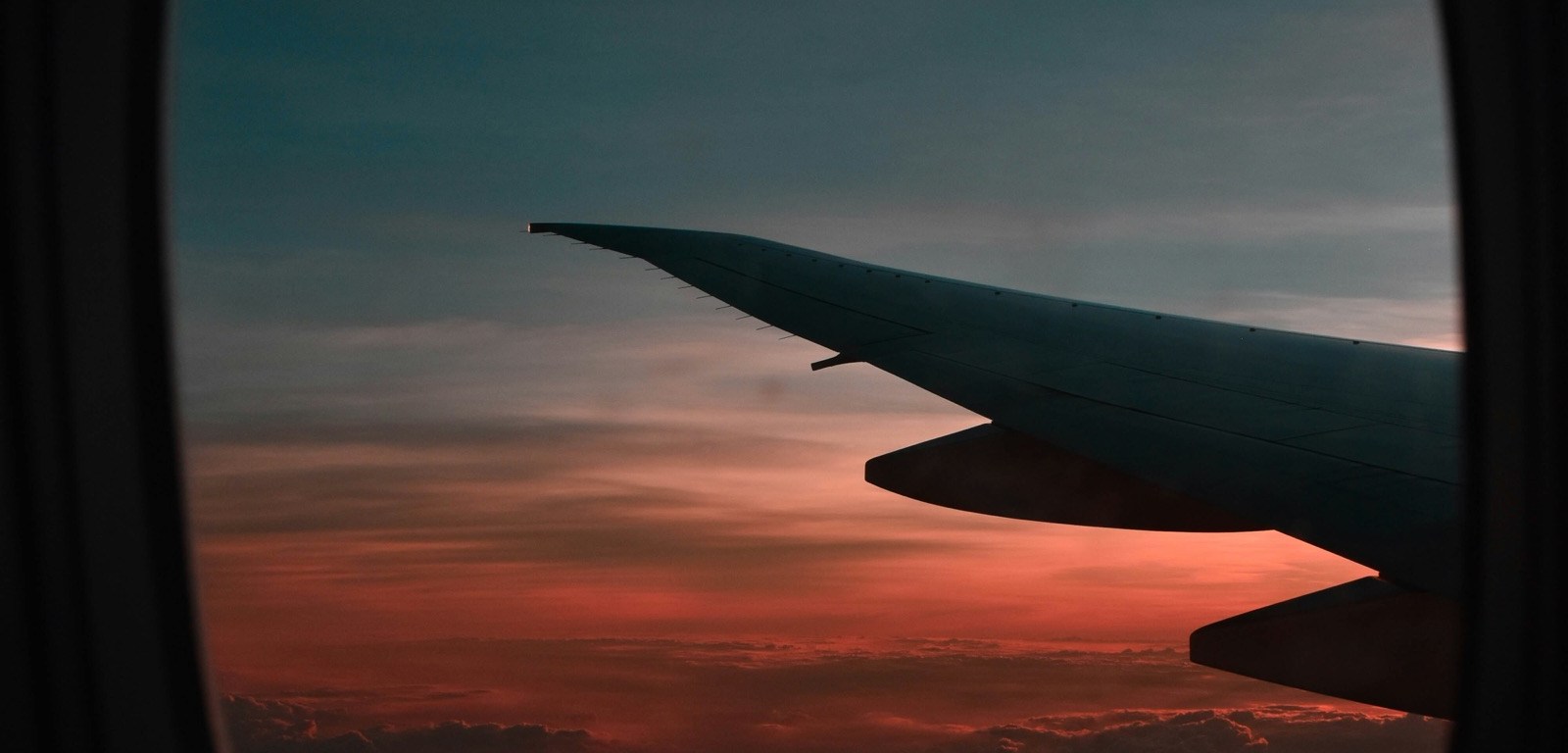
Aboard Green Africa Airline on the first day of August 2021, I stared out the window. Fear crawled across my skin as I watched my life move ahead of me. Life became a flying metaphor, dissolving into the clouds. I had often moved behind events, not because I chose to, but because I never quite held a grip on eventualities, no matter how hard I tried. Japa formed as a thought, but giving it flesh felt as slippery as a lost poem wandering the dense forest of Soyinkan imagery in A Shuttle in the Crypt.
Before the story was a story—the one that would not go under the radar even if I refused to tell it—I wished the wind of recollection would hush this moment. But how does one speak the whole truth without unlocking the memory book of the years? The Japa memory set its tone on a placid childhood morning, when the air was gentler than it would become in the 27 years between late childhood and a belly swollen with literary dreams. To understand the walk, we must begin at the beginning—Ibusa.
I gained consciousness in Ibusa, in the Obi Aniemeka family. The rustic lure of my childhood often seduces me. Nigeria then had not yet sharpened its fangs. One kobo bought me wonders. I remember, faintly, my great-grandfather, Obi Aniemeka, and more vividly, my hardworking great-grandmother Alice. Later, other relatives from those formative years would appear in my senses. Alice Aniemeka typified courage, industry, honesty, and the right amount of trouble. One of those times she handed me that trouble was when I lost the English textbook she had bought for me in Primary 4.
Back then, I had possibly not yet met Nigeria—or perhaps it was just folklore. Then came the early to mid-1990s. I was a small boy, perceived as both perceptive and talkative, also very inquisitive.
Hit by the first wave of Nigerian oddities, I came to believe that the nation’s turbulence was not unlike the 1992 classic Living in Bondage. Stories fed to me held the future as possibility. I was not naïve enough to think change would come easily, but I lapped up the religiosity of Nigeria until life turned.
I began at Christ Holiness International Church, Odozi-Obodo. A frothing spirituality followed, but for reasons I still cannot decipher, we stopped attending. My great-grandmother moved us into Catholicism. Rebellion and skepticism soon followed, born from Bible stories and the contradictions they laid bare. Mass and catechism gave me the Catholic seal, and the “Prayer for Nigeria in Distress” became gospel to me. I internalised it. The Abacha years arrived and Nigeria turned me into a child in search of meaning.
Catholic faith pointed toward the contradictions of life in dictatorship. I embraced skepticism, while still holding as much faith as I could muster. Energy surged. So much energy to plod through odds because my hope was stubborn. Since I came to the accident of birth, I had believed the fiction that Nigeria would improve. But faith withered each time dry leaves of that fiction fell.
I wanted out. I had wanted out for so long. The first brain drain happened before I was born. By the time I arrived into the care of many eyes, I believed the world to be soft, woolen even, not made for back-breaking ploughs. But teenage years brought new colors. Life felt bearable, even beautiful. I wore Hush Puppies and FUBU jeans from Manchester, all curated by my grandmother Nkechi Obi. She shaped the themes of my childhood and adolescence. She could have long snapped me off Nigeria’s invisible chokehold, but too many things stood in the way.
I took passport photographs many times, but never quite made it out of Lagos.
Nigeria became more than a story. It became reality. Ibadan hit me with culture and courage. Madness had long been a national language, though I hadn’t always understood it. I didn’t let it unseat me, but I wasn’t blind to Granny’s many attempts to send me abroad.
At some point, I grew the germs of activism. Achebe’s Things Fall Apart and No Longer at Ease stirred something. So did the English classics. Secondary school became a feast of literature. Eliot’s Silas Marner, Hardy’s Tess of the D’Urbervilles, The Mayor of Casterbridge, Ademiluyi’s The New Man—they rifled through me, unsettling me with the realization that society punishes those who think and act right. I softened. Ayo Badejo, Ademiluyi’s tragic character, sent waves of fear down my spine. I thought of Ken Saro-Wiwa. Of Dele Giwa. Brilliant men cut down by tyrants.
My mother, Kanebi, knew she bore an activist. She has always been a beautiful soul with a large heart, but she feared I might bring trouble upon myself. I questioned everything. She feared I would be harmed and longed for me to leave Nigeria. Her colleagues urged her to find a way to send me abroad.
Leaving was always on the cards. Still, a sense of patriotic duty to develop my voice and fight injustice was just as strong. I wanted to study Law like Gani Fawehinmi. I wanted to write powerful poetry like Christopher Okigbo. Between both longings, I drifted. Uncertainty drew me in. Nigeria became so badly behaved that I paused the “Prayer for Nigeria in Distress.” I could no longer whisper pleas to a God who seemed to mock my sensibilities and purpose. I could not keep praying while vultures demanded more prayers in their greed. Nigeria prayed too much. I refused to help evil leaders through futile petitions. I would rather voice my disdain than participate in collective denial.
Patriotism, to me, meant acting rightly. Speaking truth to power. But Japa still called. I feared Nigeria was a carnivorous river, one that swallowed its brightest seeds. They say I am brilliant. I half-believed it. Or maybe it didn’t matter. What mattered was not being swallowed.
My dream spread across family lines. My aunties and uncle wanted me out. Everyone did. I completed my first degree at University of Nigeria Nsukka (Ikere-Ekiti campus). I dreamed of flying out for a master’s abroad. The wind went still. Nothing happened. Another dream deferred. I enrolled at the University of Ibadan. By the time I completed my MA, Nigeria was grating at the last edge of my patience.
Time fled. Each Japa attempt fizzled. Aunty Pauline Obi, bless her soul, was proud of me. Illness held her down. It frustrated her that she couldn’t support me. She would say, “You’ll break free, once I get better.” On December 11, 2018, she passed—with my Japa dream folded inside her. Grief consumed me. Aunty Pauline meant everything. She still does. The world lost something luminous the day she left.
Three years after her passing, Charles University happened. Prague happened—quietly, without the drama that Alabama and McMaster had promised but never delivered. Hope rekindled, though it carried the scars of past disappointments. Joy finally outpaced the gloom of 2021. Nigeria had held me too long in its belly of chaos.
Now, I am learning the rhythm of night without the clatter of iron birds. I have escaped the place of rage. The daily headlines from Nigeria still stir a virtual angst in me, but like Hardy, I am far from the madding crowd. I am wrapped in the cold hands of winter, kissed intermittently by summer, and brushed gently by the speculative winds of autumn.
Nigeria is my country, but now it is a space in memory. A country I once inhabited, fun while it lasted. I am not set to praise it if it shrank me. I can only honour countries that give joy freely, not grief in lumps. Call me patriotic for telling the truth Nigeria handed me. Or abuse me if you prefer the lies of greatness that have become impossible fictions.
The last two decades were locust years. Vultures upon vultures turned Nigeria into a graveyard of dreams. Violence thrived. Hunger walked the streets. Uncertainty became atmosphere. Japa grew irresistible. The hyena years are upon us. The civilian Buhari years echoed the brain drain of 1984 and 1985—both times orchestrated by the same man, first as military ruler, then as civilian president. Now, Tinubu shells out even grimmer stones, invoking fresh bursts of blood on the battered green.
Japa became real. Coming to Prague had its own story—the twists and roots of destiny. Now, I breathe fresh air. A pointer that Nigeria had me captive for too long. I miss my mum, my sister, my brilliant friends and co-travellers. Yes, I miss the smell of Ibadan, the amala, the quarrelsome dialect, the playful proverbs of Micra drivers. I miss Ivory—my sunlight at Lent. But it is hard to miss Nigeria. The chaos perforates it. Even though I left a tribe of people and books behind.
Ndubuisi Martins is a Nigerian poet, poetry theorist, and critic. He is the author of one gazelle and two collections of poetry, including Answers through the Bramble, longlisted for the 2022 Pan African Writers Association’s (PAWA) Prize for Poetry (English Category). He is a PhD Candidate in the Department of Anglophone Literatures and Cultures at Charles University, Prague, Czechia. Ndubuisi’s poems have been published in African American Review, Lunaris Review, Ngiga Review, African Writer, Sorosoke Anthology, and elsewhere. With the notable Nigerian poet, Remi Raji, Ndubuisi edited Twenty-Two Voices for WPD 2022 (An E-Chapbook, Noirledge Limited). A literary scholar, Ndubuisi is co-editor of Critical Perspectives on Nduka Otiono. He currently serves on the Advisory board of The Protagonist, a postgraduate literary journal of literary criticism at Charles University. Ndubuisi is as well a reviewer for a couple of academic journals.
 ArtisansQuill| Celebrating Wordcraft
I just finished reading your piece now; very thrilling and resonant. I have always enjoyed reading your pieces. This one is an excellent blend of memoir, reflection, and literary craftsmanship. I started reading it earlier in the afternoon but had to pause to attend to other things, because with its captivating beginning, I knew it’s a piece I shouldn’t rush. I returned to it an hour ago and I enjoyed every bit of it! So compelling to read. Bro, I always marvel at your polished style of writing but of course, I know how much blood and sweat you have invested in honing the craft to this elevated state.
I revere how you weave your personal history, familial influence, and socio-political commentary into this profoundly poetic prose. And your patriotic conscience? I can vouch for that 100%. Overall, I LOVE this piece, more importantly because it resonates so strongly with me. In semblance, it mirrors fragments of my own story.
Just like you, I wore shining patriotism, like a treasured garment, in my earlier years. I still wear it but faintly now. In my teenage years, especially, I used to proudly speak about how I hoped to change Nigeria someday. After secondary school, crippling poverty tried so hard to sink my educational dreams but I grew too stubborn and resilient for its machination – a story I had shared a few times on some platforms.
Then, there was the earlier days of my Facebooking journey, the era my literature-inspired anger and patriotic zeal propelled me to pour out protest pieces against the crippling cruelty of the ruling class.
I was sure the constant outpour changed nothing in government but it helped me carve out a voice for myself back then, gave me some visibility and relevance and earned me some social media followership and friendship – which I still enjoy till today. Then, from 2017, I became more intentionally aggressive about Japa, just like you.
Because, at that time, I had built a proud track record of successes as a teacher of English and Literature, I started sending application letters to seek teaching jobs ANYWHERE outside the shores of Naija. I must have written hundreds of applications! To several schools in China, the UK, the US, and even some African countries. But I got an abundance of silence, snub, rejections (sometimes polite and sometimes not), etc. Then, I got a very few green lights – ULink College Guangzhzouin China in 2019; British International School and Montessori Education (BIS), Freetown Sierra Leone in 2020; and Andalus International School in Saudi Arabia in 2022. Sadly, the Chinese school contract eventually fell through; Covid ruined the BIS opportunity; and I turned down the Andalus’ appalling offer.
Qatar was NEVER part of my dream – not in my wildest dreams! Providence perhaps used it (through a singular football-related conversation I had with the parent of an ex-student of mine during the 2022 Qatar World Cup) to console me for the many years of raised and dashed hopes.
In the midst of applying for those jobs, I was simultaneously applying for funded masters in the UK and the US – Universities of Cumbria, Alabama, and so many others. Partial scholarship offers poured in but getting the remaining funds was herculean. My wife and I made frantic attempts to sell my piece of land and hers but we ran into brick walls every time – perhaps God’s way of telling us to wait for his time.
Thank you so much for this beautiful piece. It compelled me to return to writing something – this comment – after a lazily long time of shying away from writing.
LikeLiked by 1 person